

Projects
What we're
building
Named research initiatives spanning haptics, acoustics, perception, and wearable technology — each grounded in peer-reviewed work.
VibroSleeve
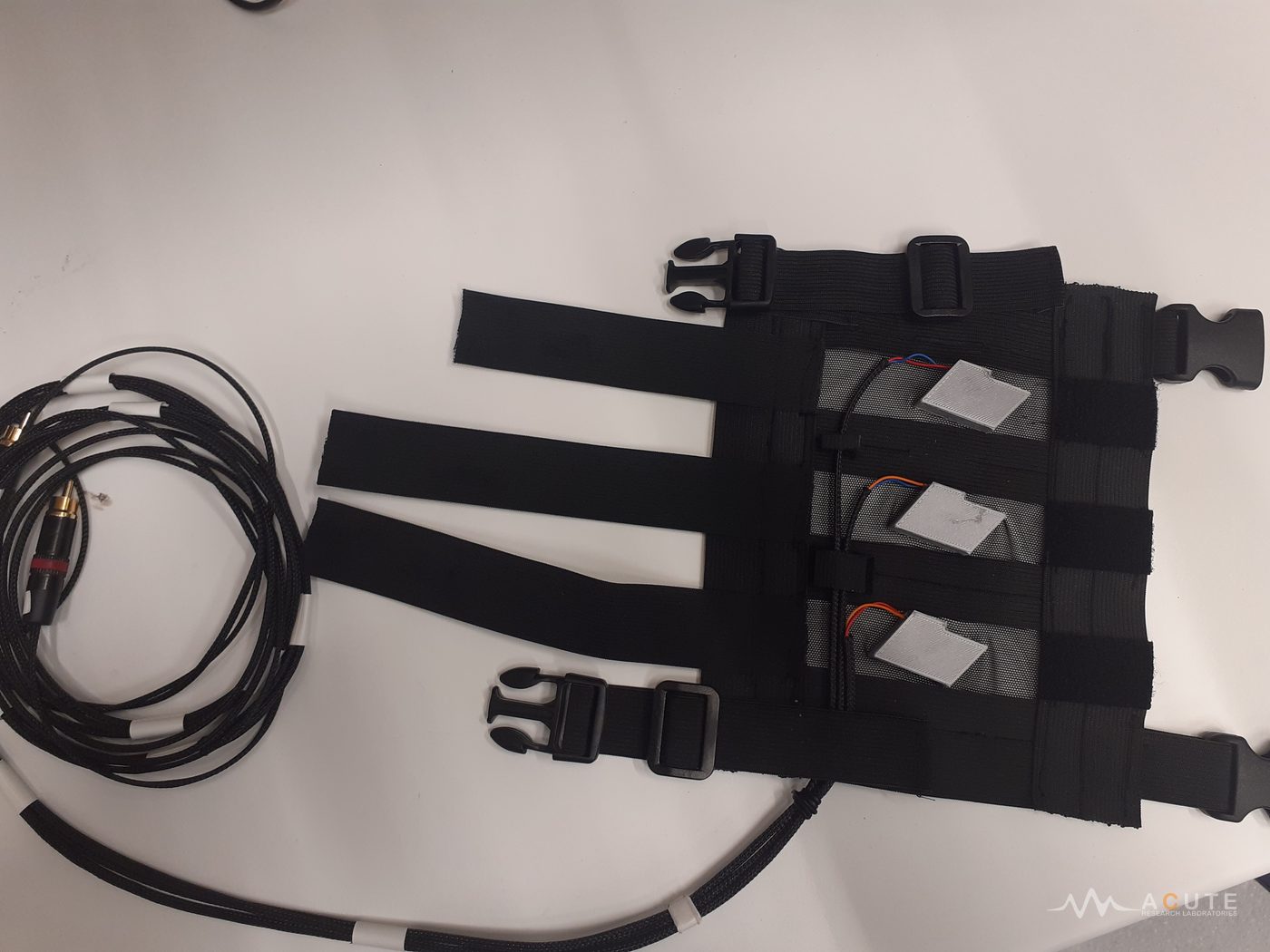
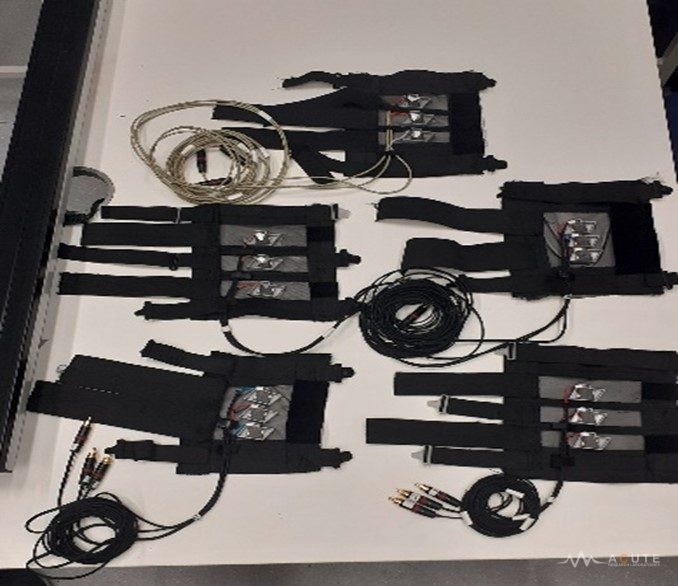
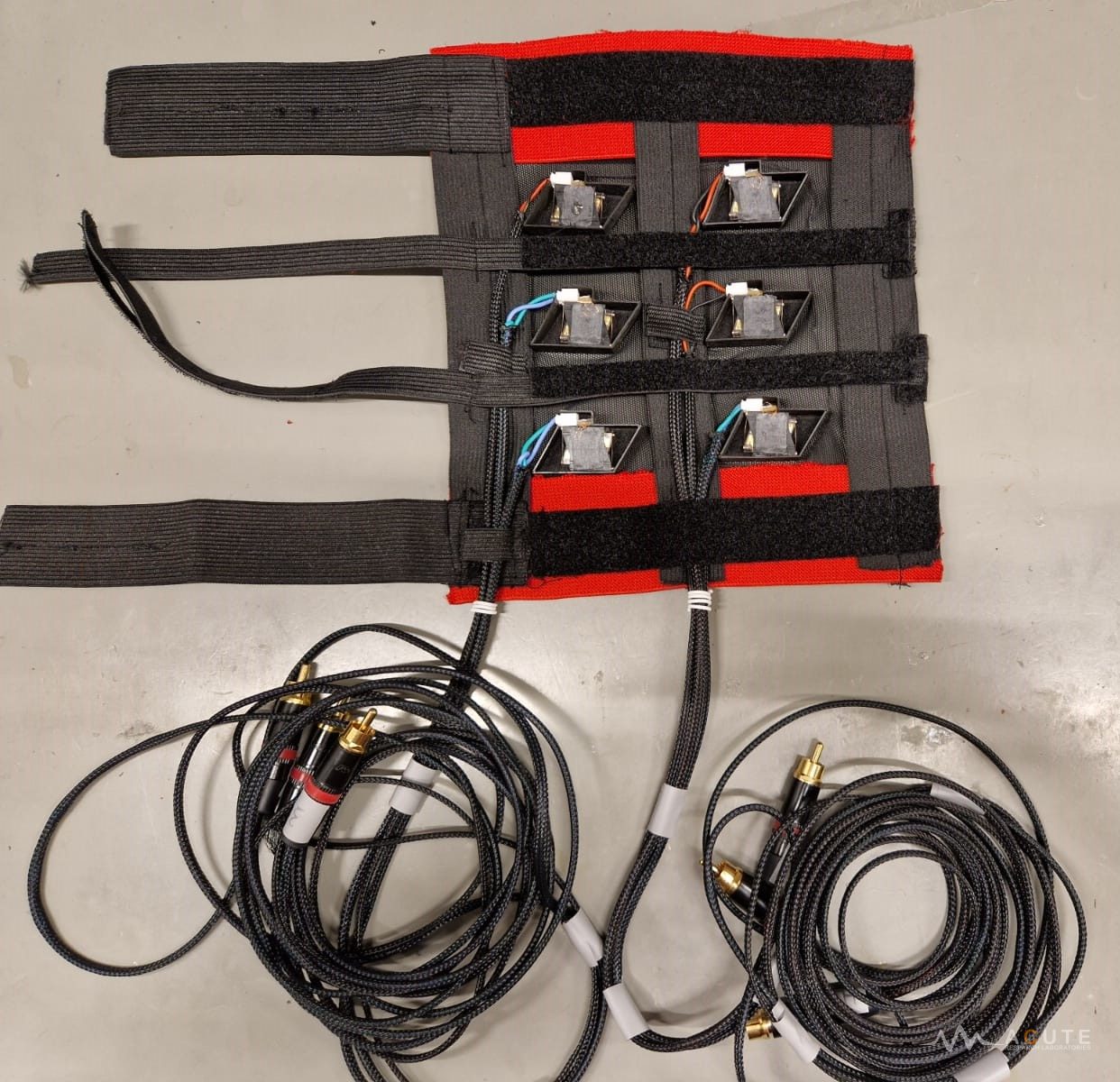
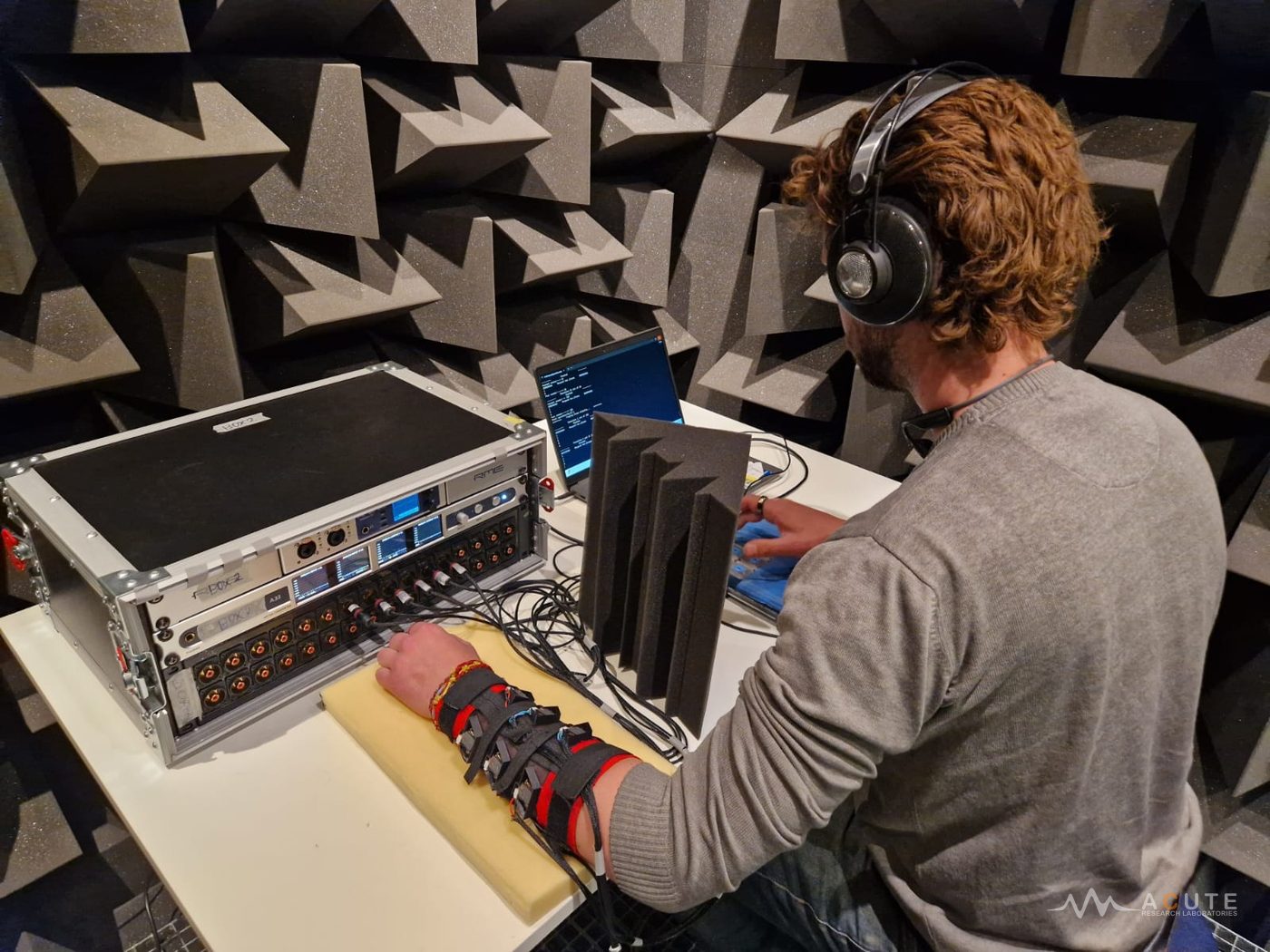
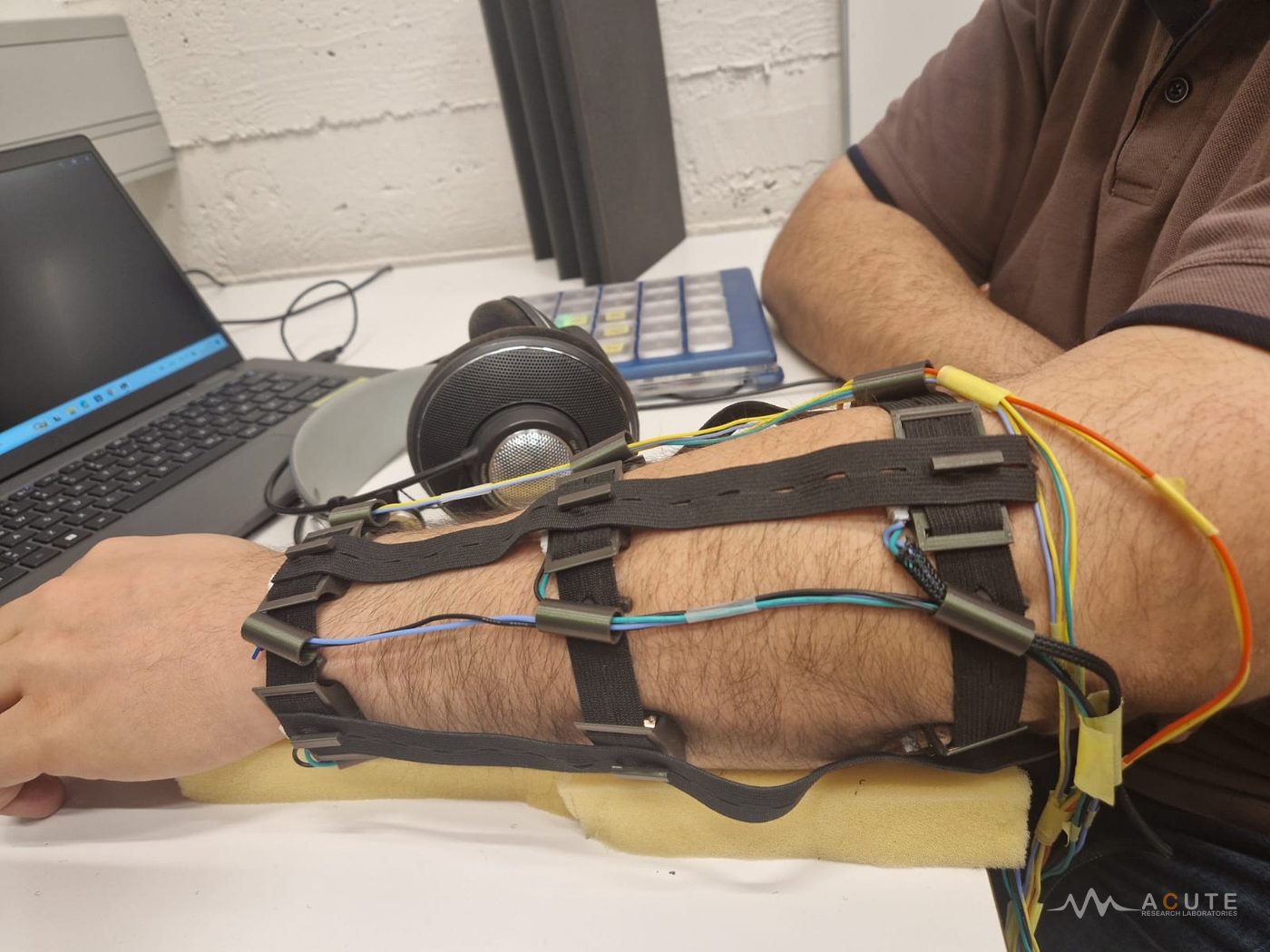
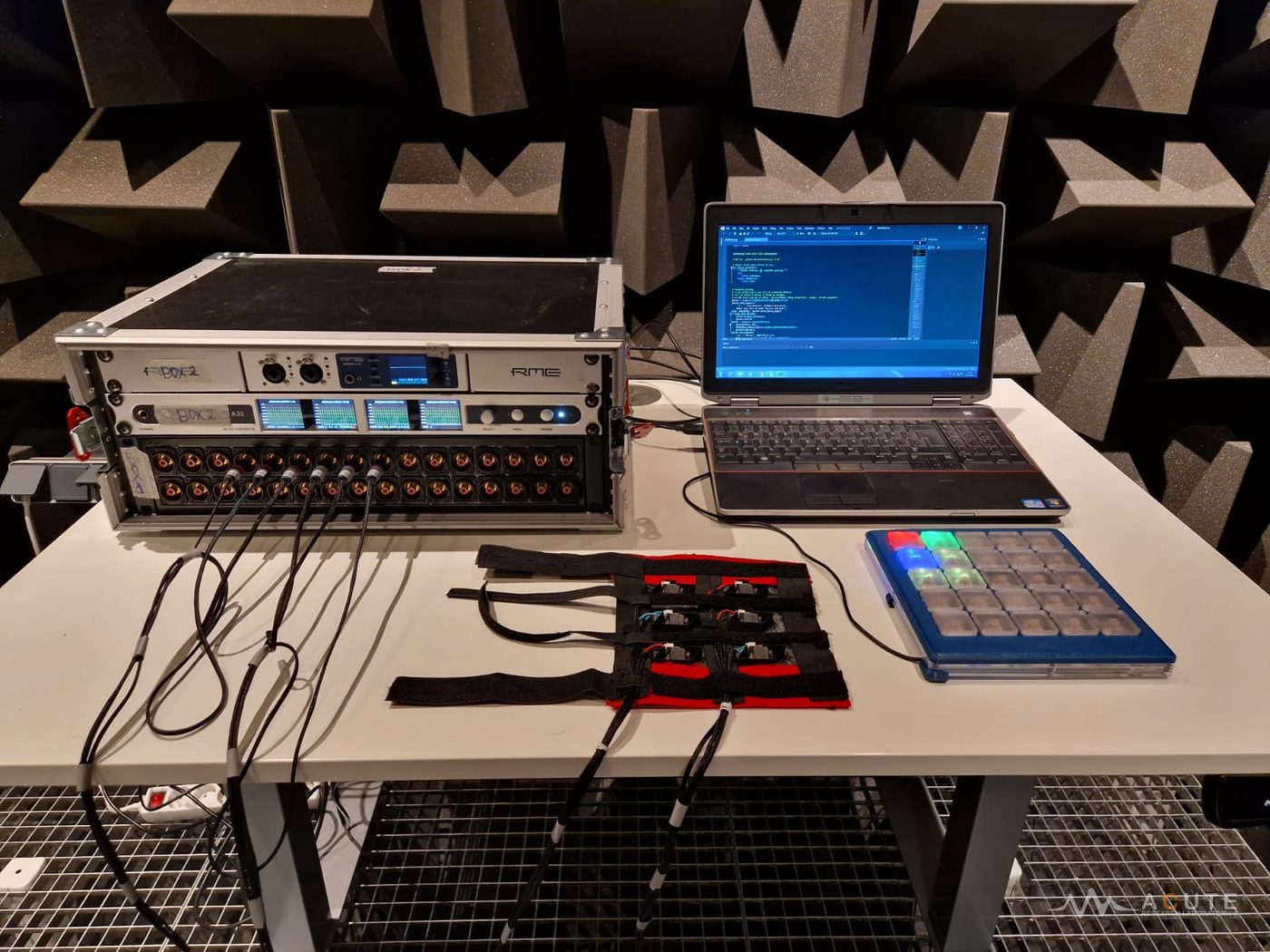
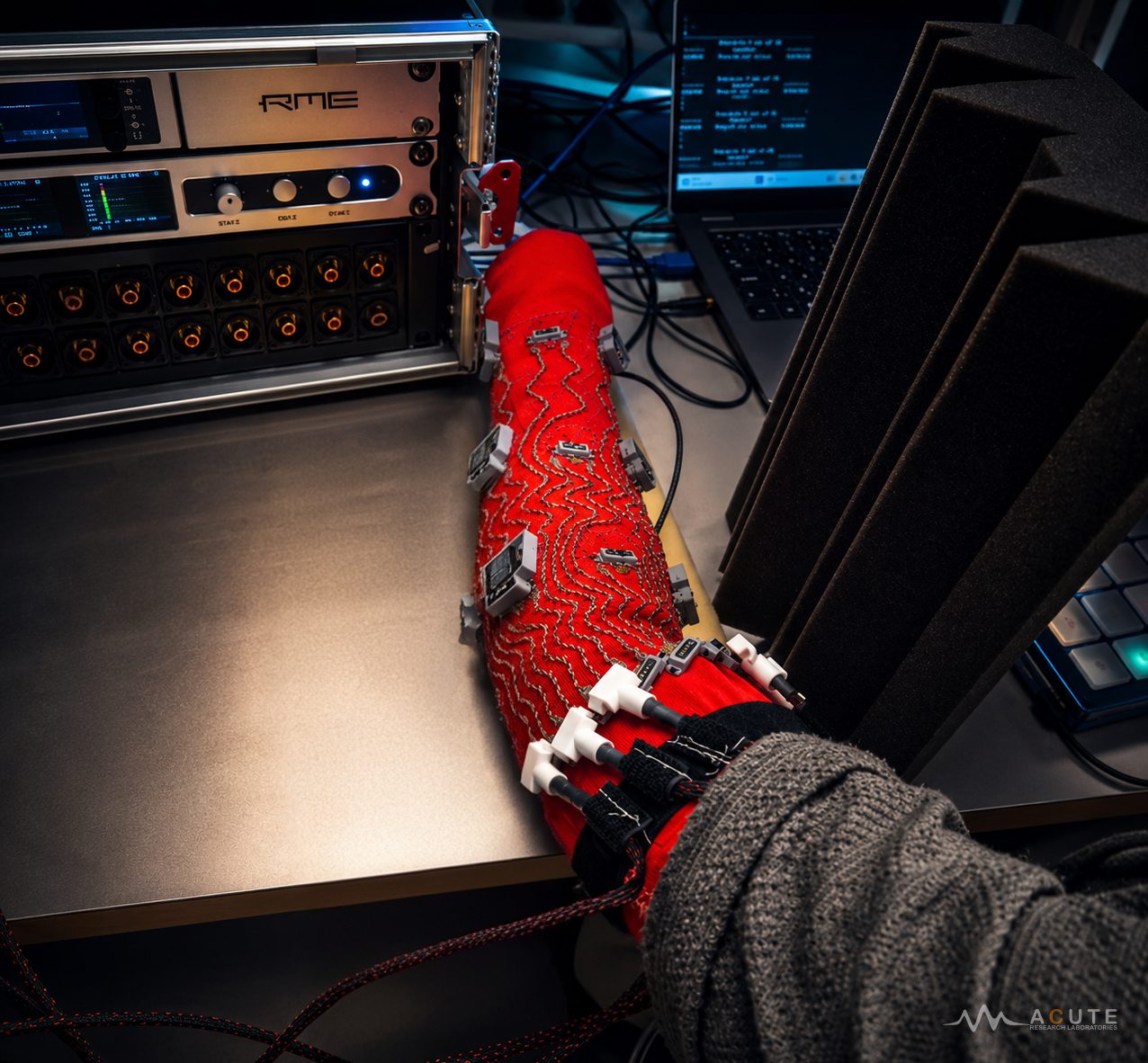
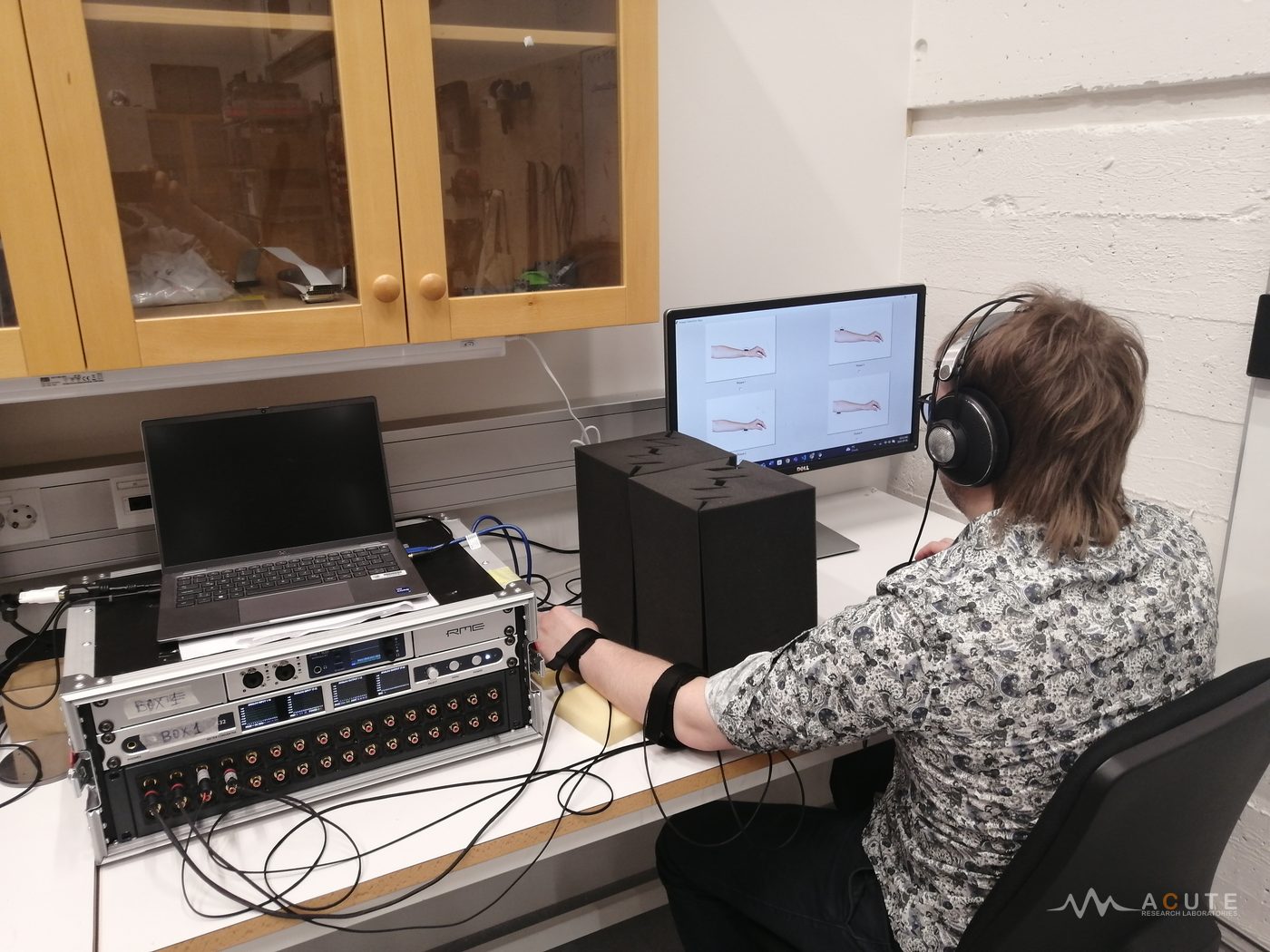
Active HapticsA forearm-worn vibrotactile display with six voice-coil actuators arranged in a 2×3 array, designed to deliver Braille-like spatial patterns through the skin. The device serves as the shared hardware platform across several ACUTE projects.
Sequential presentation of patterns achieves 93% recognition accuracy versus 26% with simultaneous stimulation. At optimal interstimulus intervals (300 ms), short patterns reach 92–98% accuracy. The system has been validated with 14 distinct patterns and tested for both frequency and location effects on the forearm.
.jpeg)
Prosthetic Haptic Feedback
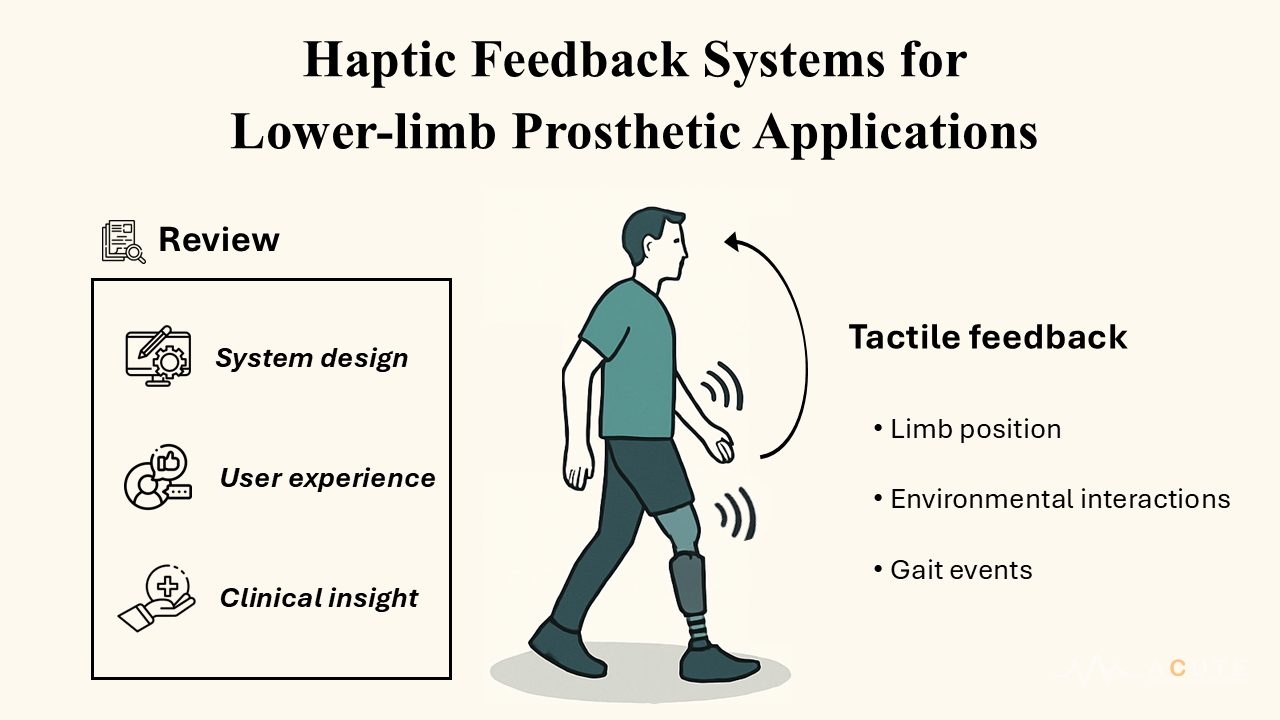
Active HapticsProstheticsThis project focuses on developing a wearable vibrotactile feedback system for people who use lower-limb prosthetic knees and ankles. Many prosthesis users face challenges in safely and confidently controlling their devices, partly due to limited sensory feedback. This research aims to address that gap by providing intuitive vibration-based information about the prosthesis state and function. Using a user-centered and iterative design approach, the project explores how feedback should be delivered, where tactile actuators should be placed, and which vibration patterns are most effective, comfortable, and usable. Prototypes will be developed, refined, and evaluated through technical testing and user feedback.

Haptic Harmony
Active HapticsPerceptionMusic-to-tactile translation via wearable vibrotactile devices, enabling richer musical experience for cochlear implant users. The project investigates how amplitude and frequency map to tactile discriminability, establishing the perceptual parameters for effective haptic encoding of musical content.
A three-actuator sleeve delivering tactile accompaniment to music enhanced perception beyond what a cochlear implant alone provides. Separate psychophysical work showed that amplitude is the dominant channel for vibrotactile discrimination at the wrist — frequency-only changes were near chance, and combined cues offered no additional benefit.
Viking HRTF Dataset
Completed AcousticsAn open, full-sphere Head-Related Transfer Function dataset measured at 1,513 spatial positions on a KEMAR mannequin fitted with 20 custom-molded silicone pinnae. The dataset enables controlled study of how pinna shape influences spatial hearing cues, and underpins machine learning efforts to predict personalised HRTFs.
Synthetic pinnae manufactured with 0.25 mm scanner accuracy allow isolation of individual anthropometric effects — something impossible with natural ears. An MLP trained on 15 anthropometric parameters achieved 3.54% mean prediction error for HRTFs (vs. ~15% with a standard KEMAR). A separate model predicting the lowest pinna spectral notch from 3D meshes achieved 3.3% median mismatch, halving prior methods.
PAAAC
Active AcousticsPerceptual Aspects of Acoustics for Active Auditory Channels — investigating whether geometrical acoustics simulations can faithfully preserve the auditory cues essential for human echolocation, enabling virtual training environments for blind echolocators.
Validated against the BRAS benchmark dataset, the work establishes requirements for virtual training rooms that accurately reproduce echo-based spatial information. The goal is to let blind individuals practise echolocation safely in simulation before transferring skills to the real world.
Reduced Order Modeling (ROM) of Room Acoustic Simulations
Active AcousticsSimulationStructure-preserving model-order reduction for time-domain room acoustics based on the Linearized Euler Equations. The approach maintains numerical stability at complex frequency-dependent boundaries while dramatically reducing computation time.
The new full-order formulation achieves a 3.5× speedup over the conventional approach. When combined with the reduced-order model, total speedup reaches 100× — making wave-based acoustic simulation practical for interactive applications and room design.
Rhythmic Haptic Communication
Emerging HapticsExploring low-cognitive-load non-verbal communication through rhythmic vibrotactile patterns. The project investigates the psychophysics of temporal haptic encoding — how rhythm, timing, and intensity sequences can convey simple messages through wearable devices without demanding the user’s visual or auditory attention.
Building on ACUTE’s established findings that sequential presentation and amplitude variation are the most effective vibrotactile channels, this project extends the work toward practical everyday communication scenarios.
E-Textiles & Wearable Integration
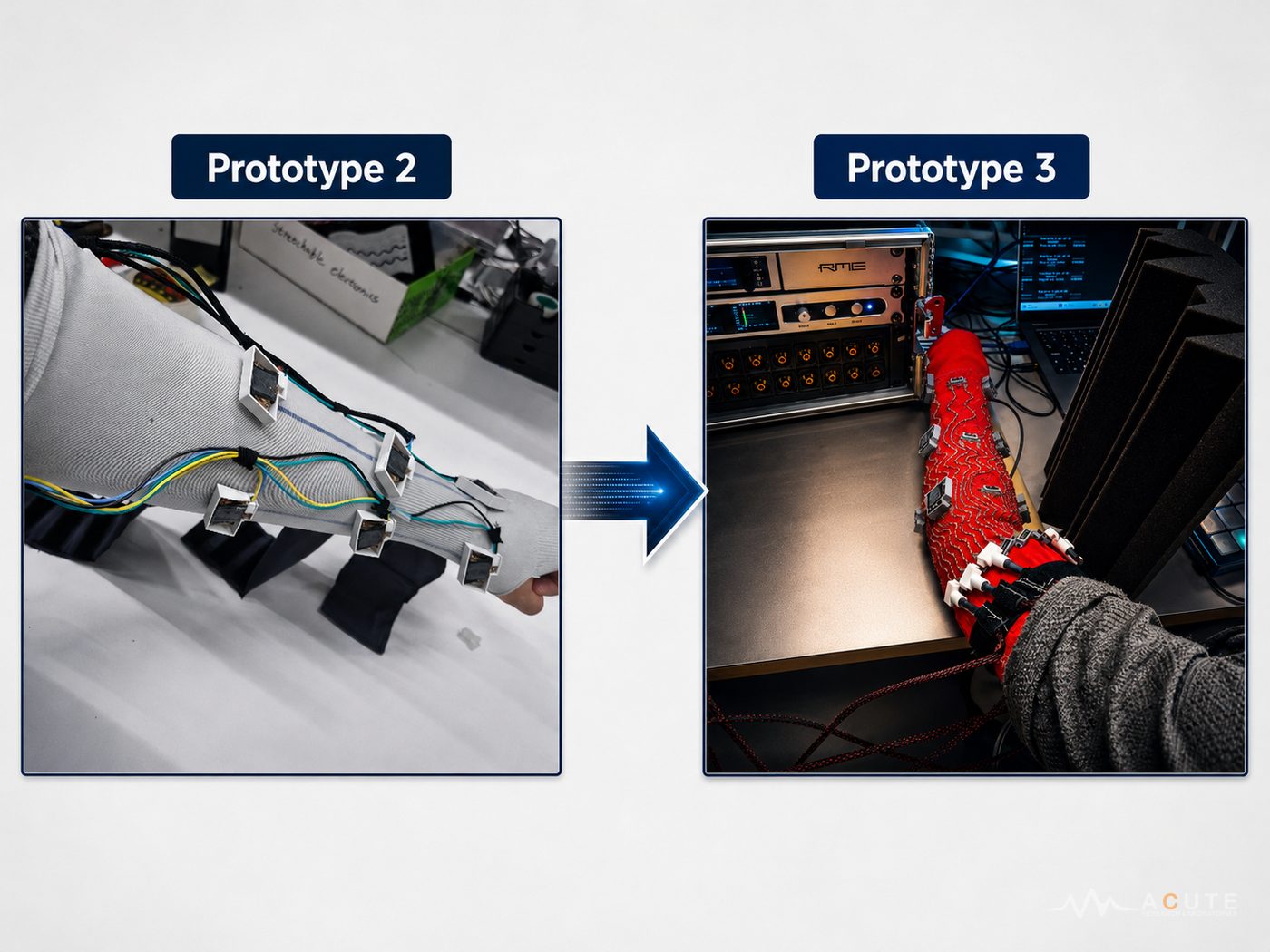
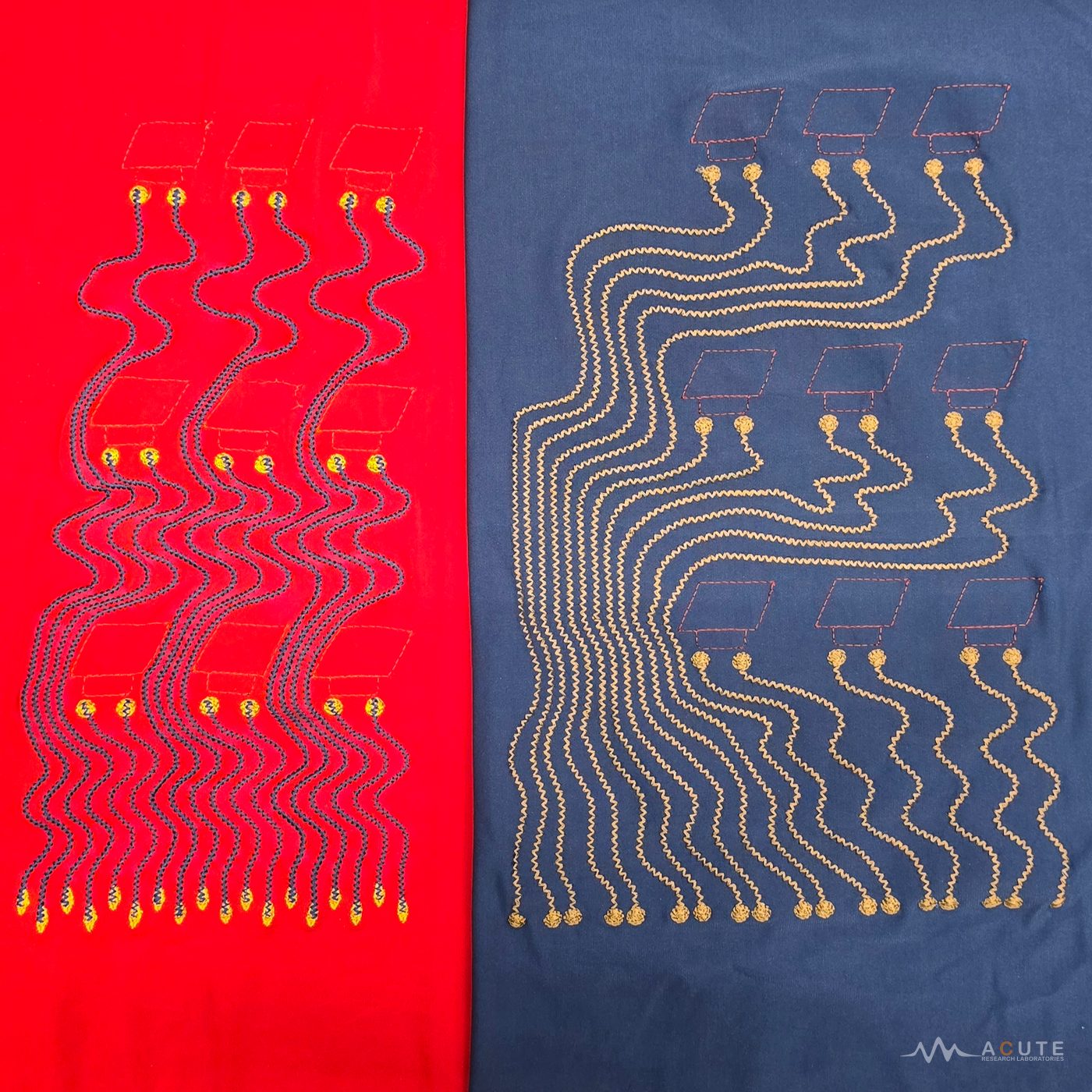
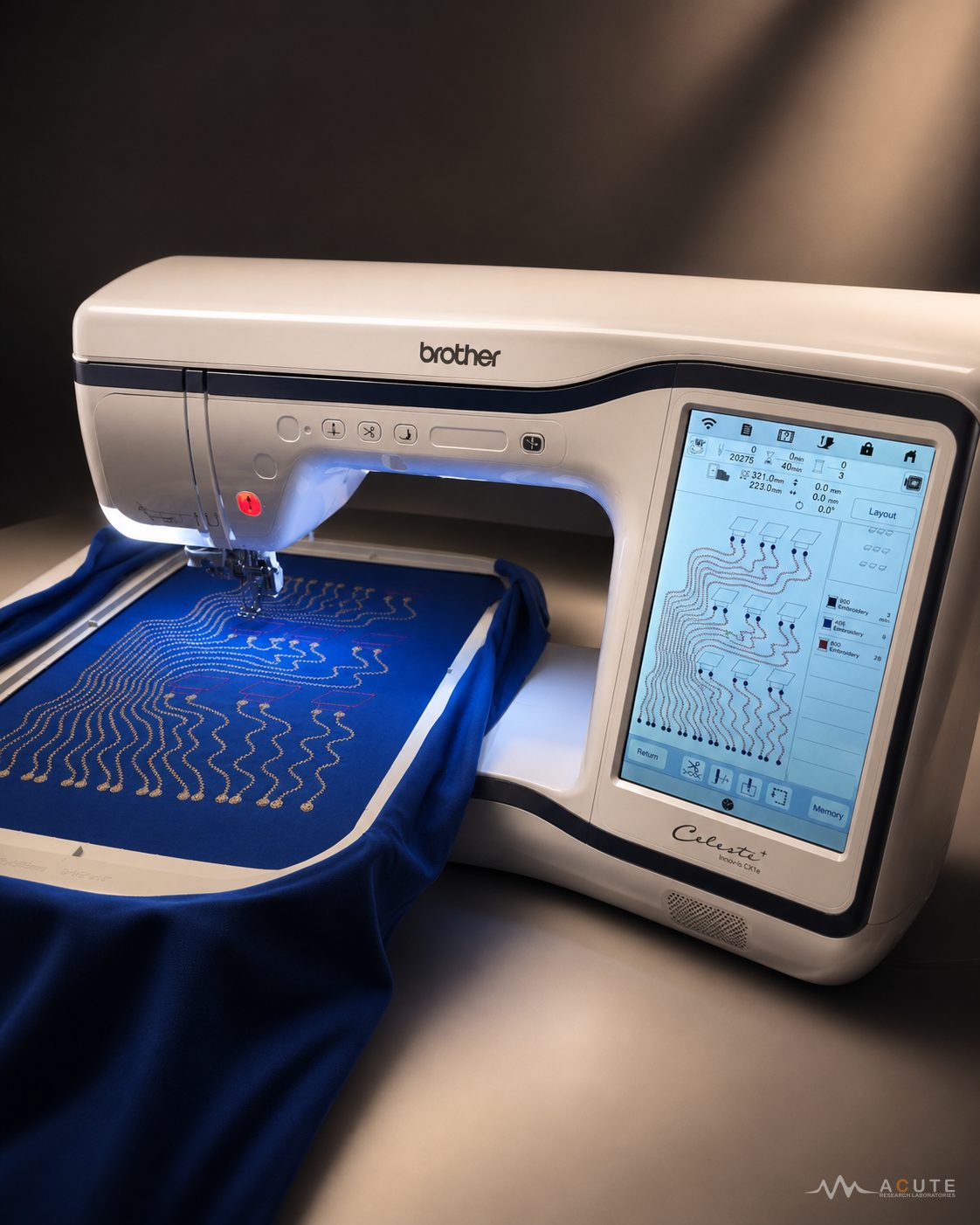
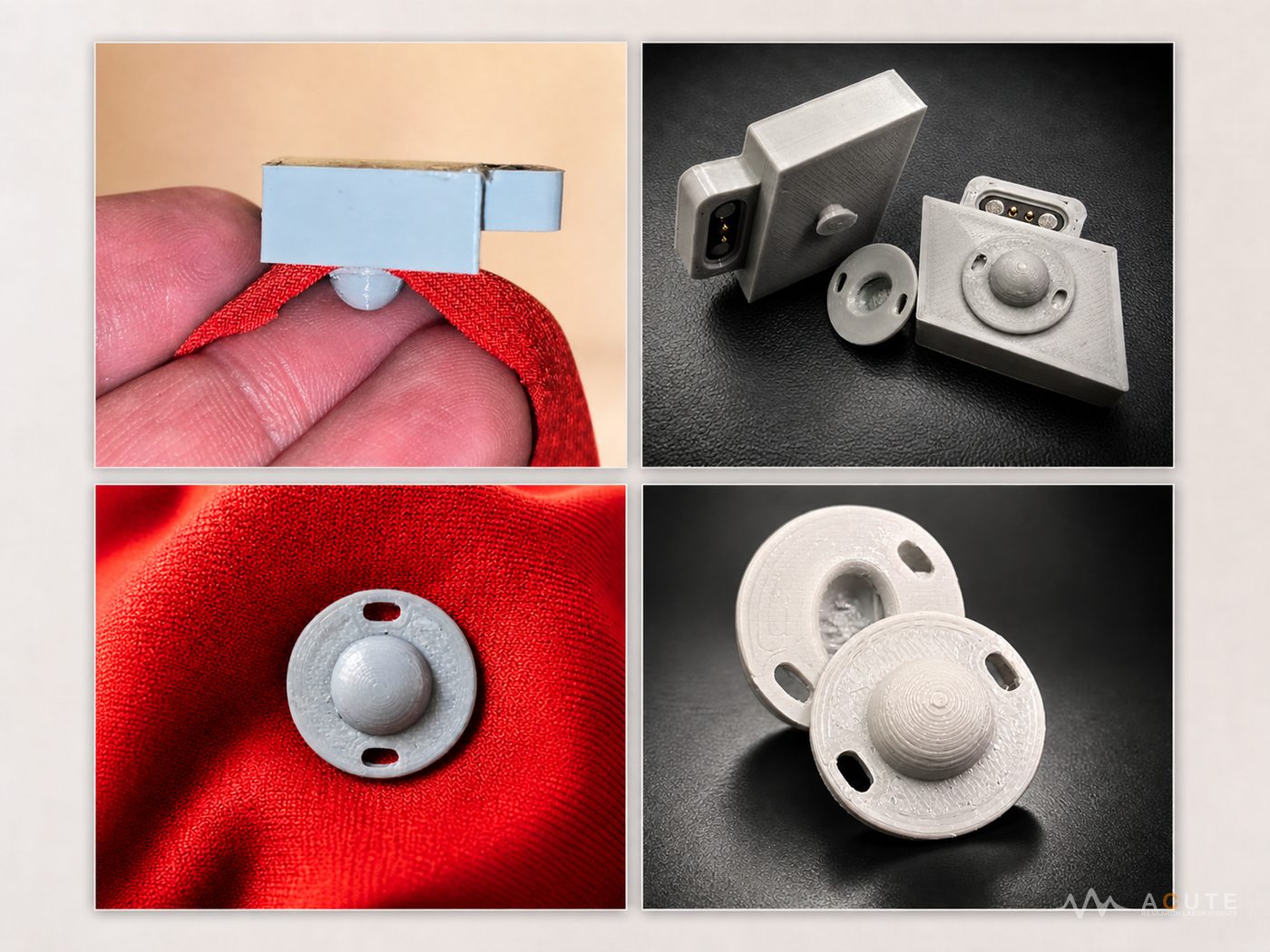
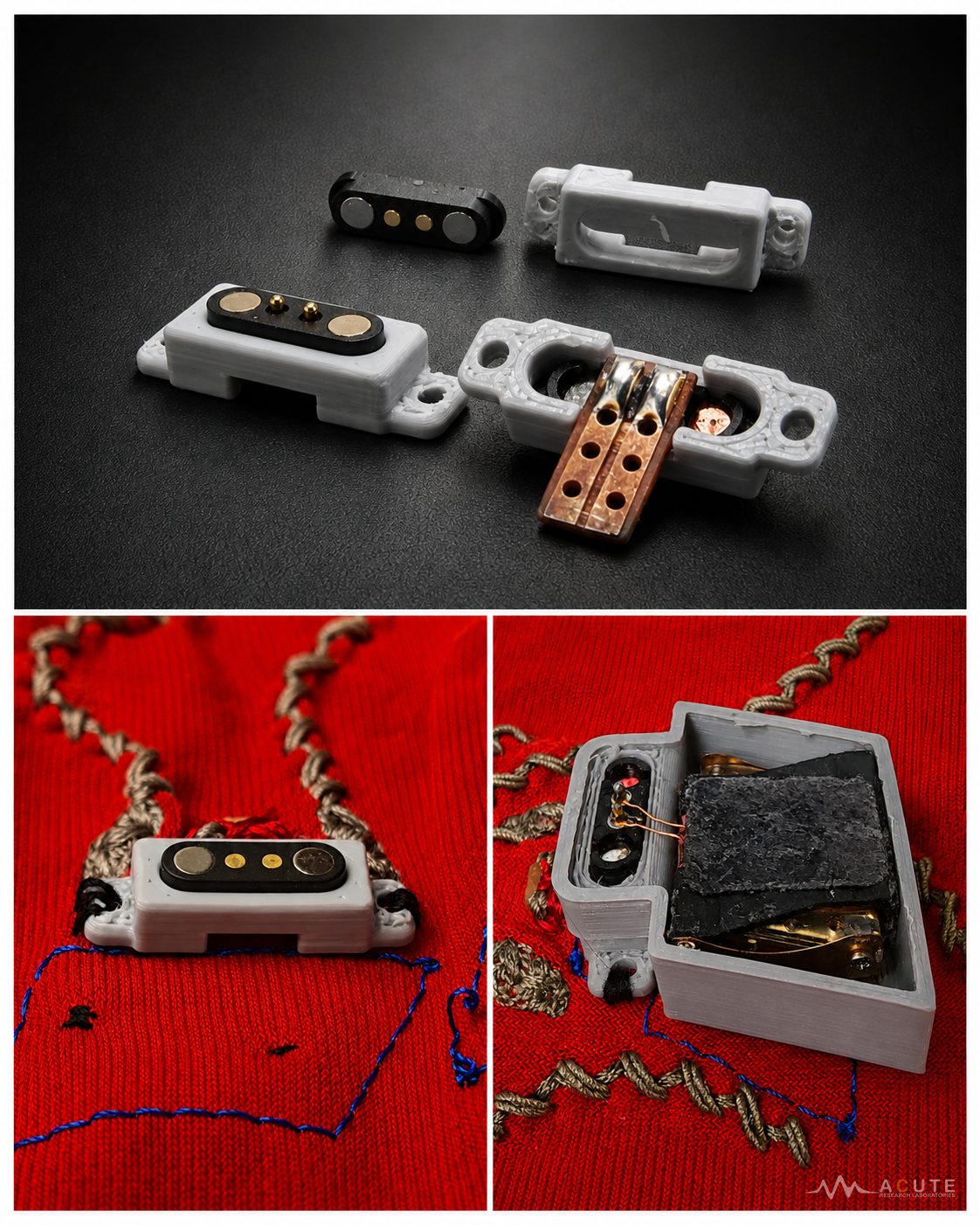
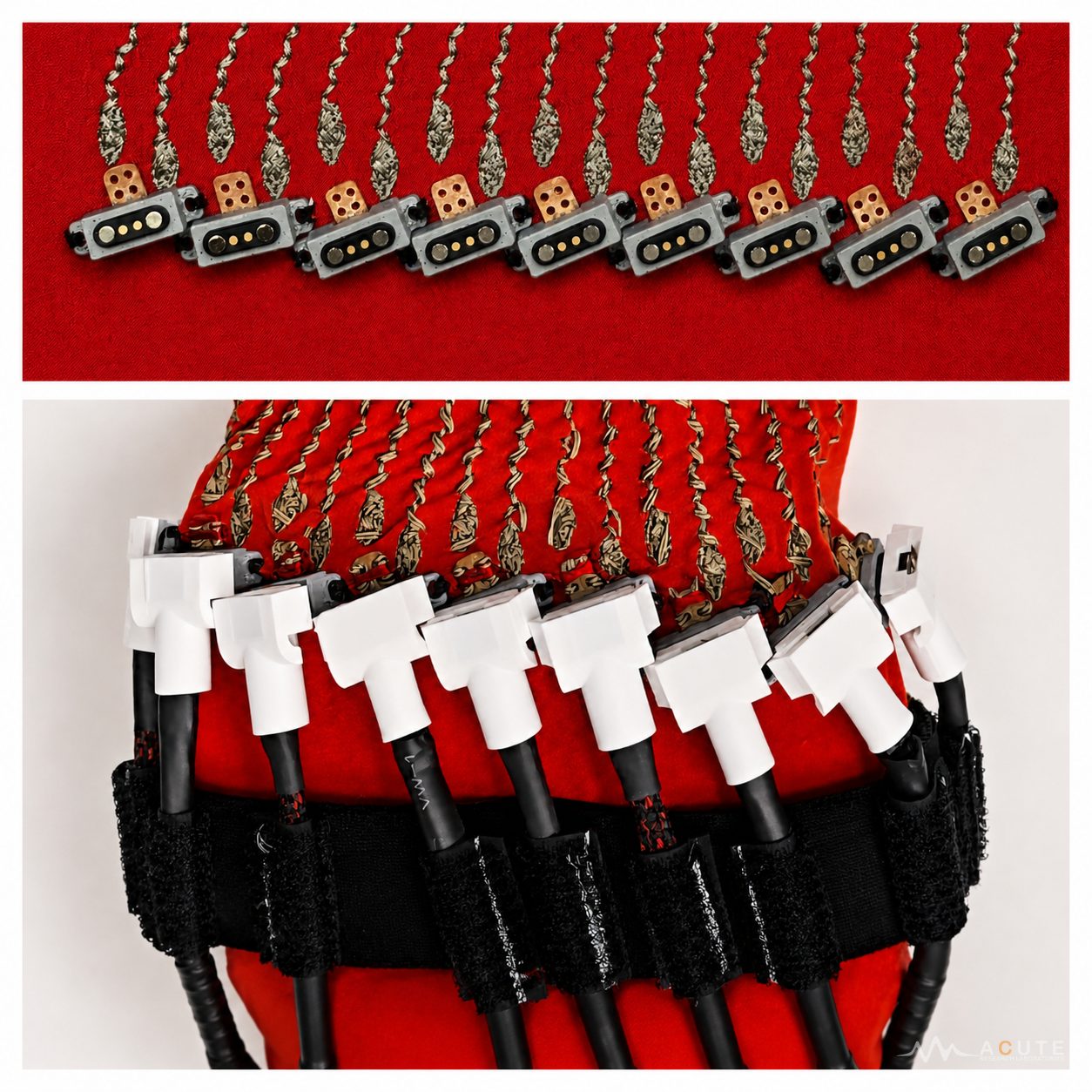
Emerging HapticsWearablesIntegrating textile-based sensing and actuation into wearable form factors. The project bridges ACUTE’s vibrotactile research with soft, fabric-embedded electronics — moving actuator arrays from rigid lab prototypes toward garments suitable for everyday wear.
The work draws on the lab’s perceptual findings (actuator placement, frequency sensitivity, sequential vs. simultaneous delivery) to inform the design constraints of textile-integrated haptic systems.