

Team
Rúnar Unnþórsson
Principal Investigator
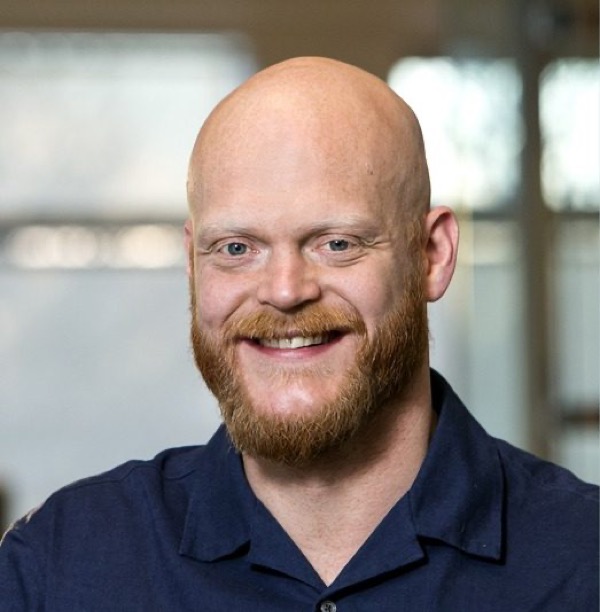
Acoustics for solving real-world challenges. Using sound to understand systems, extend human perception, and develop technologies that are more intuitive, accessible, and safe.
Acoustics for Human Perception and Interaction
Rúnar Unnþórsson has over 27 years of experience in research and product development, including more than 11 years focused on sensory substitution and augmentation technologies. His work centres on extending human perception through the integration of acoustic and tactile modalities, carried out in close collaboration with multidisciplinary research teams.
As Principal Investigator of the Sound of Vision project, he worked with an international consortium to develop a wearable system that translates visual information into spatialised audio and tactile feedback, enabling visually impaired users to perceive and navigate their surroundings.
Building on this collaborative foundation, his recent work—together with students and research partners—focuses on the development of a multi-purpose tactile wearable platform for audio-tactile information delivery. The system supports a wide range of applications, including enhancing music perception for hearing-impaired users (e.g. cochlear implant recipients), providing assistive information for visually impaired individuals (including tactile/Braille-based communication), and supporting prosthetic (lower-limb) users through improved sensory feedback and interaction with their environment.
This research is conducted within the ACUTE (ACoustics and CUTaneous Engineering) research laboratory, co-led by Rúnar Unnþórsson and Árni Kristjánsson, Professor of Psychology at the University of Iceland and lead PI of the Vision Lab. Depending on the application domain, additional professors and specialists contribute as co-PIs, reflecting the interdisciplinary nature of the work.
Acoustics for Spatial Audio and Immersive Systems
In parallel with his work on perception, Rúnar and his team investigate virtual acoustics and spatial audio, focusing on how sound is modelled, perceived, and reproduced. This includes developing methods for estimating head-related transfer functions (HRTFs) and designing systems that deliver realistic and personalised sound through headphones.
These efforts support applications in virtual and augmented reality, simulation, and assistive technologies, where sound functions both as a perceptual interface and as a source of information.
Acoustics for Diagnostics and System Understanding
Non-destructive testing (NDT) using acoustic emission and vibration-based methods has been an underlying theme throughout Rúnar’s research career, dating back to his doctoral work on acoustic emissions from carbon fibre reinforced polymer (CFRP) prosthetic feet subjected to multi-axial fatigue loading.
Building on this foundation, he has—together with collaborators and students—continued to explore how acoustic methods can be used to monitor material behaviour and extract information about structural integrity and system condition.
Over time, this work has naturally extended across acoustic domains, including how sound is perceived, reproduced, and utilised in human-centred systems. This transition reflects both a scientific progression and a personal interest in sound, including the study and collection of musical instruments and their acoustic characteristics.
In recent years, these combined perspectives have been applied to energy storage systems, particularly in the evaluation of used or recalled lithium-ion batteries. Given the potential safety risks associated with such batteries, this work focuses on developing acoustic-based diagnostics to support safer assessment, handling, and repurposing. Emerging work also considers similar approaches for next-generation battery technologies, including aluminium-ion systems.
Research Vision
Rúnar’s research is guided by a unifying vision: to use acoustics as a means of understanding, interacting with, and improving both technological systems and human experience.
At its core, this work views sound and vibration as carriers of information—whether for sensing, diagnosing, or communicating—and explores how these signals can be used across domains ranging from material behaviour and energy systems to perception and human interaction.
Through collaborative and interdisciplinary research, his work aims to develop solutions that make everyday life safer, more accessible, and more intuitive, while being driven by curiosity and a genuine interest in the underlying physical phenomena.